Product Introduction
Product Positioning
ThingsGatewayRuntime is designed for industrial site data collection, edge processing, alarm judgment, and data forwarding scenarios, providing three types of management entries: GatewayRuntime, Studio, and Watchdog, used respectively for runtime configuration, engineering maintenance, and operation protection.
This document follows the current GatewayRuntime configuration and web interface. The repository was checked against runtime 2.2.6.0; ports, plugins, and menu permissions may still vary by installation package, so use the actual environment as the source of truth.
When using it for the first time, first understand the division of labor among the three entry points: Studio, Watchdog, and GatewayRuntime, then read Collection Configuration, Plugin Manuals, Data Forwarding or System Settingsaccording to on-site tasks. No need to read from all pages in order.
ThingsGatewayRuntime is a Industrial IoT Edge Gateway Runtime Platform focused on data acquisition, processing, and forwarding at the edge. The platform is deployed at industrial sites, directly communicating with PLCs, sensors, instruments, and other devices, completing real-time data collection, conversion, alarm detection, and business processing.
What is an Edge Gateway?
Edge gateways are intelligent devices deployed on industrial sites, located between the field device layer and the upper-level management system. Its core function is to process data at the source, rather than transmitting all raw data to the cloud for processing.
product consists of three web management interfaces: Studio, Watchdog, and GatewayRuntime, covering engineering maintenance, runguard, and gateway configuration respectively.
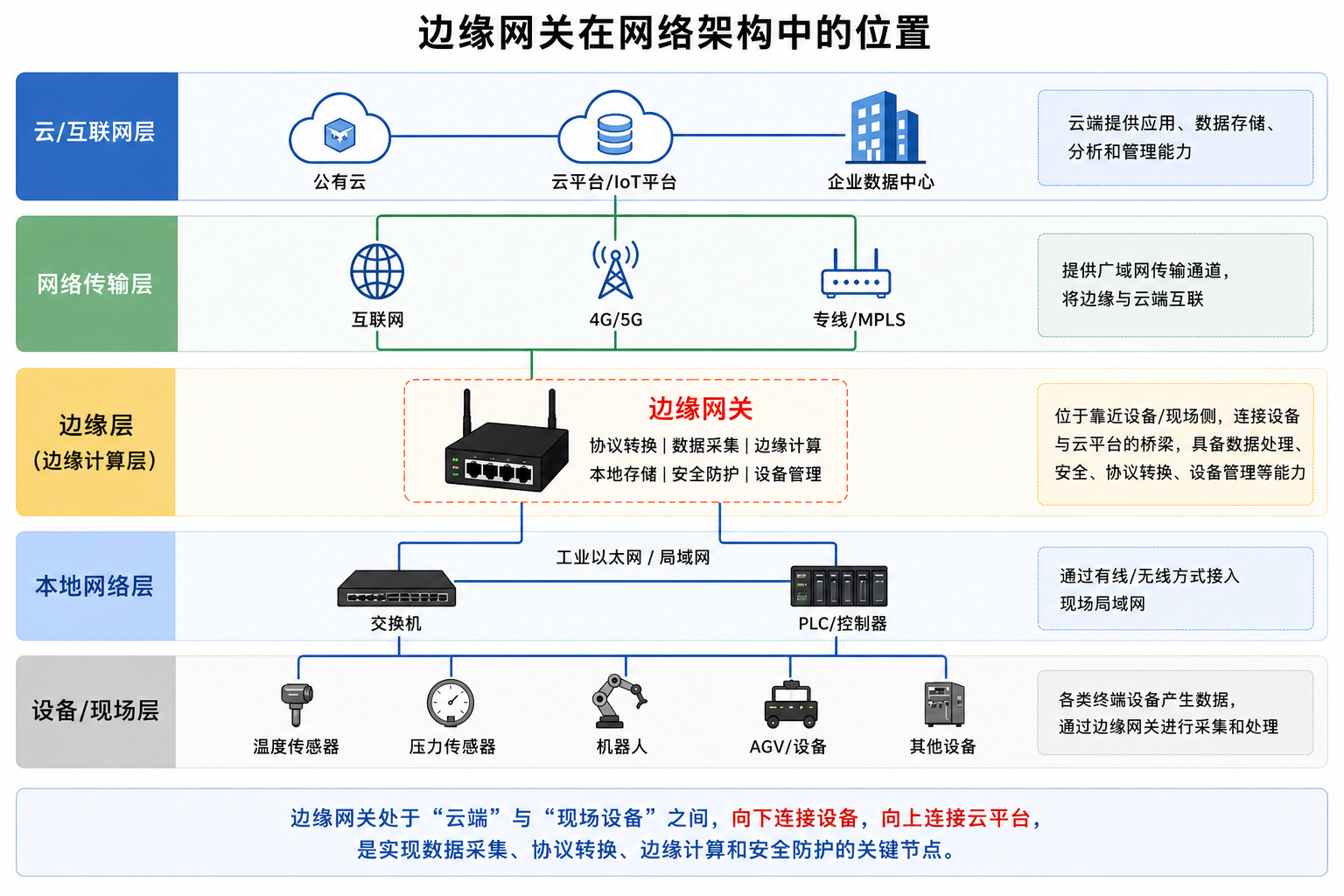
Traditional Mode vs Edge Computing Mode
| Comparison Items | Traditional Mode (Cloud Processing) | Edge Computing Mode (Local Processing) |
|---|---|---|
| Data Flow | Field Devices → All Data → Cloud Server → Data Processing | Field Devices → Edge Gateway → Processed Data → Cloud Server |
| Network Bandwidth | High | Low Usage |
| Response Latency | High | Low |
| Cost | High | Low |
| Reliability | Network-dependent | Local processing for high reliability |
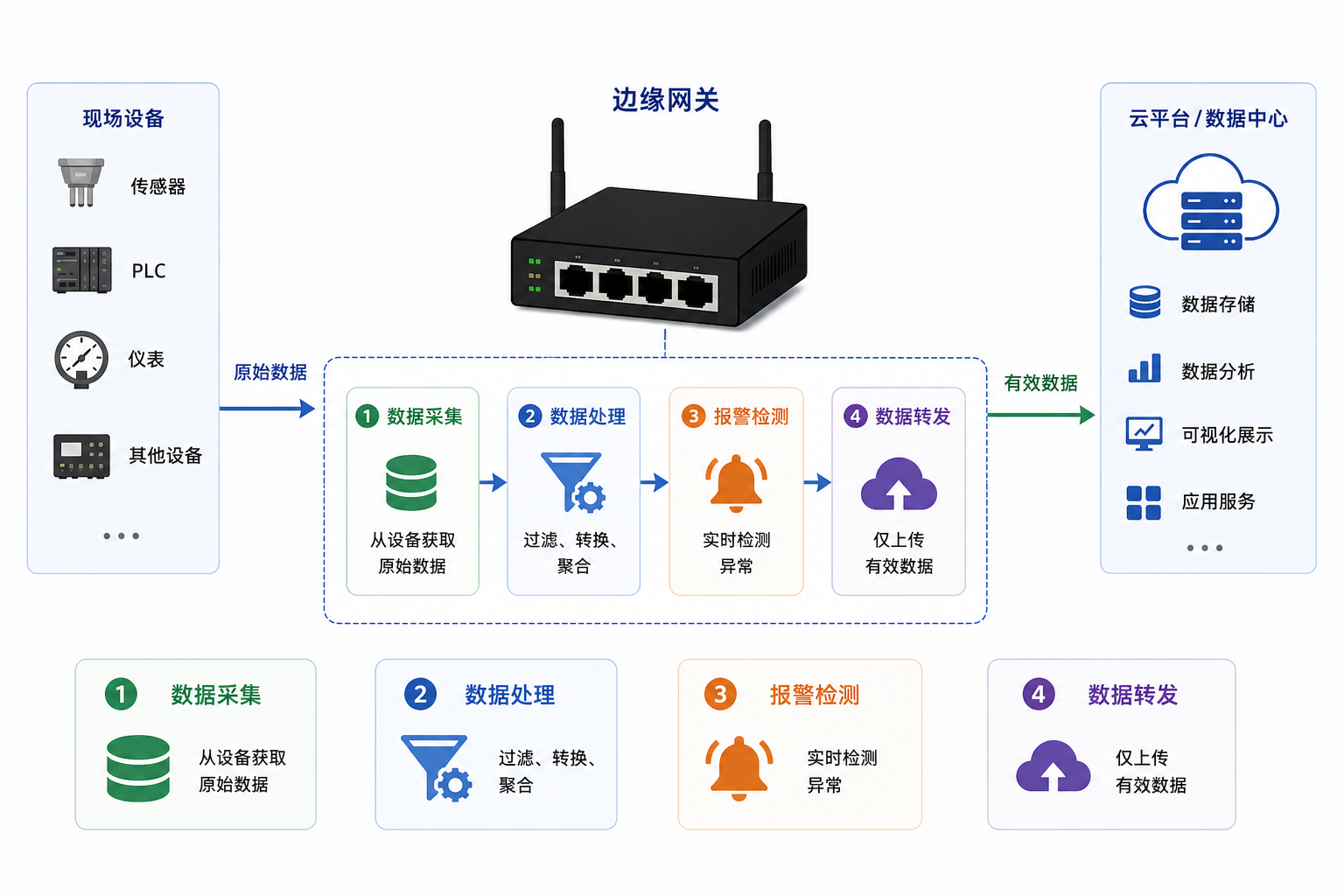
Core functions of edge gateways
| Features | Description |
|---|---|
| Data Collection | Obtain raw data from devices |
| Data processing | Filter, transform, aggregate |
| Alarm detection | Real-time anomaly detection |
| Data forwarding | Uploading only valid data |
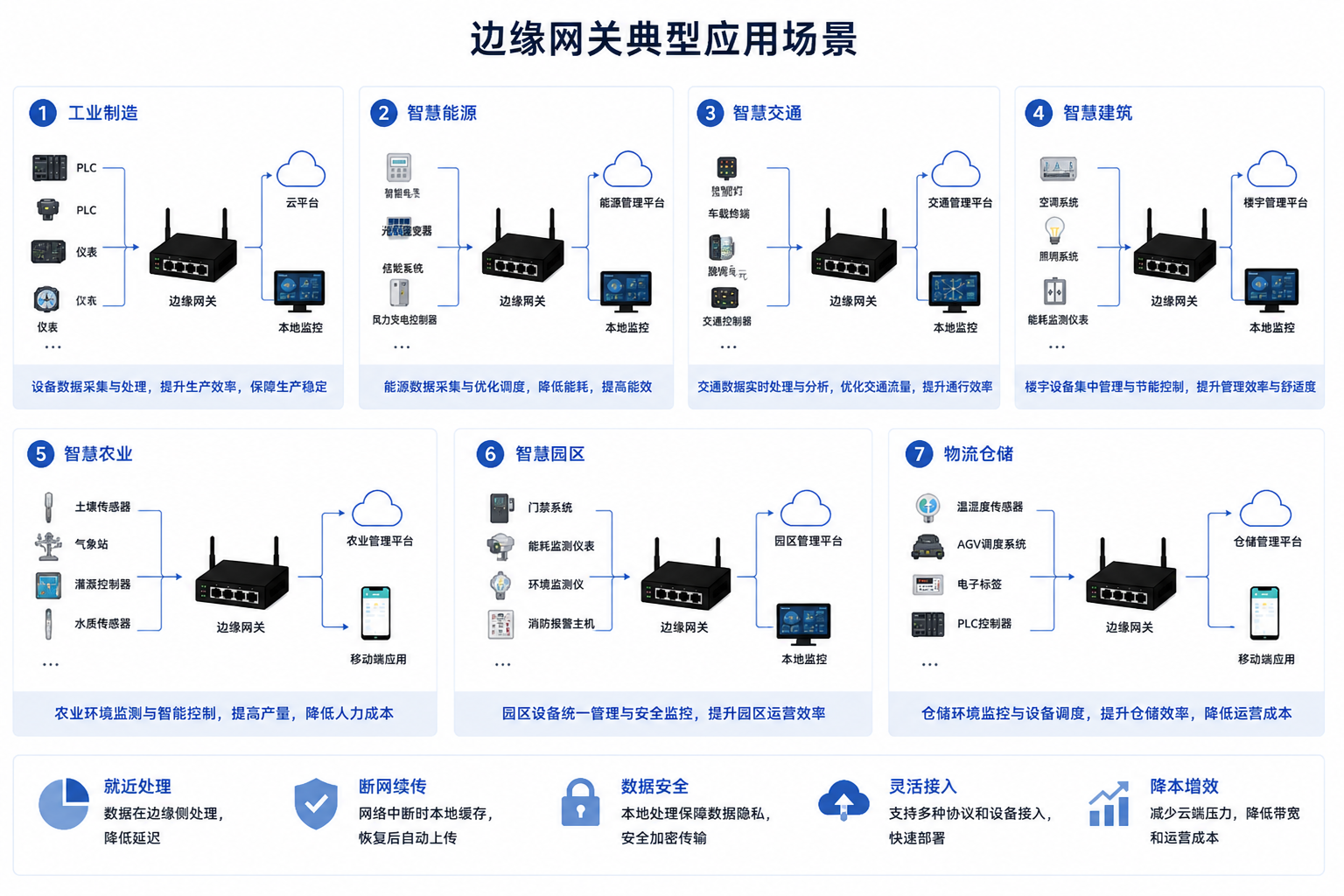
Application scenarios for edge gateways
Typical application scenarios include local device collection, edge-side alarm judgment, runtime rule handling, data forwarding to the upper-level system, and remote deployment and recovery via Watchdog.
Core Value
| Value Points | Explanation | Returns |
|---|---|---|
| Edge Intelligence | Data processing on the field side | Reduces network transmission and latency |
| Protocol Conversion | Supports multiple industrial protocols | Breaks down device communication barriers |
| Real-time response | Millisecond-level data acquisition | Meets real-time monitoring needs |
| High reliability | Redundancy and automatic recovery mechanisms | Ensures business continuity |
| Flexible scalability | Expandable capabilities through plugins, scripts, and rules | Adapts to different business scenarios |
| Easy to deploy | Ready to use | Reduces implementation costs |
| ** Visual Management** | Web Interface Management | Lowers the Barrier to Use |
Product Composition
ThingsGatewayRuntime consists of three core components that work together, Jointly accomplishing edge computing tasks.
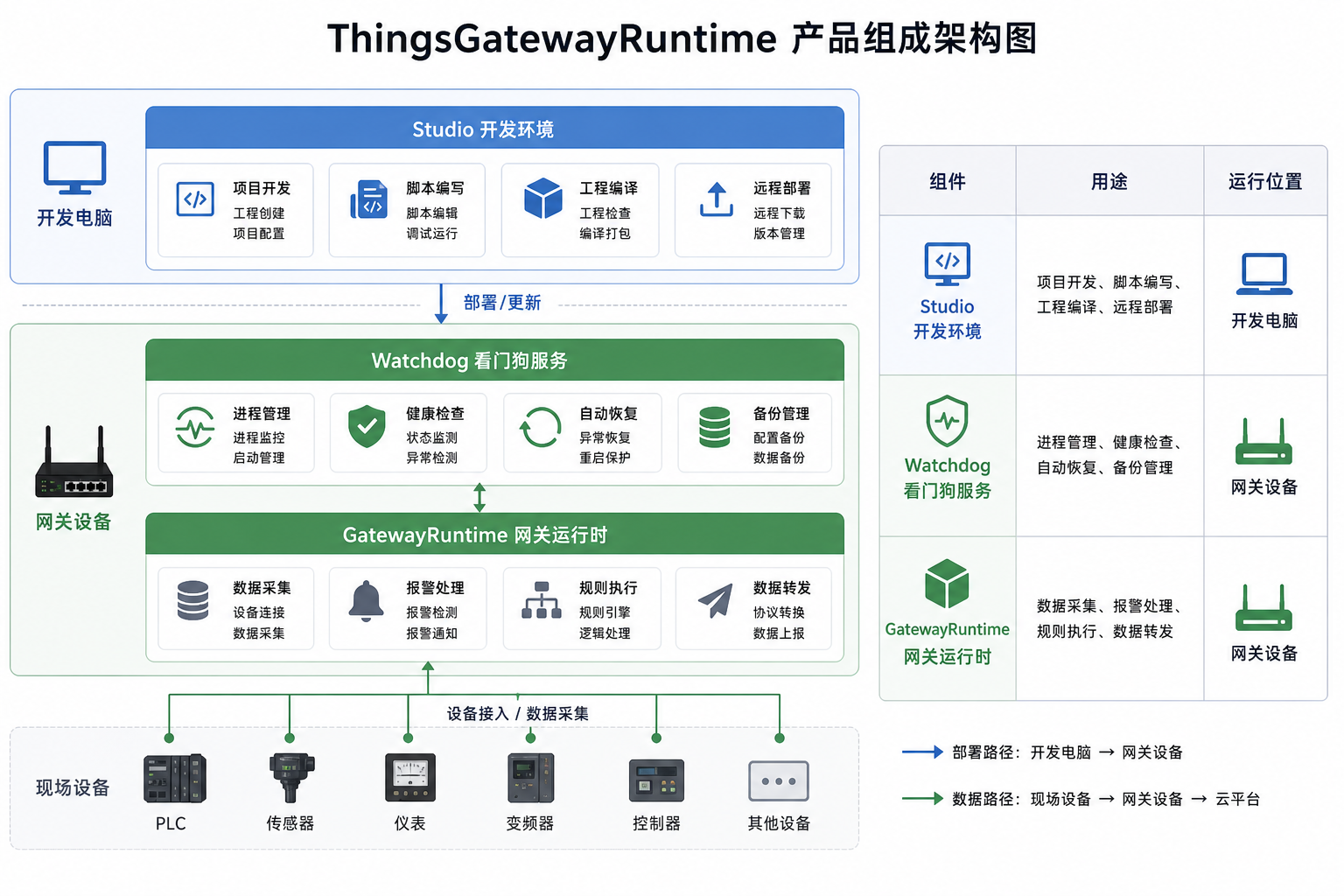
| Partial | Purpose | Operating Location |
|---|---|---|
| Studio Project Management | Project Management, Local Operation Verification, Remote Deployment, Tunnel Broker and Watchdog Connection Management | Project Maintenance Computer |
| Watchdog Service | Process Management, Health Check, Auto-Recovery, Backup Management | Gateway Device |
| GatewayRuntime | Data collection, alarm handling, rule execution, script compilation, data forwarding | Gateway Device |
Studio Project Management
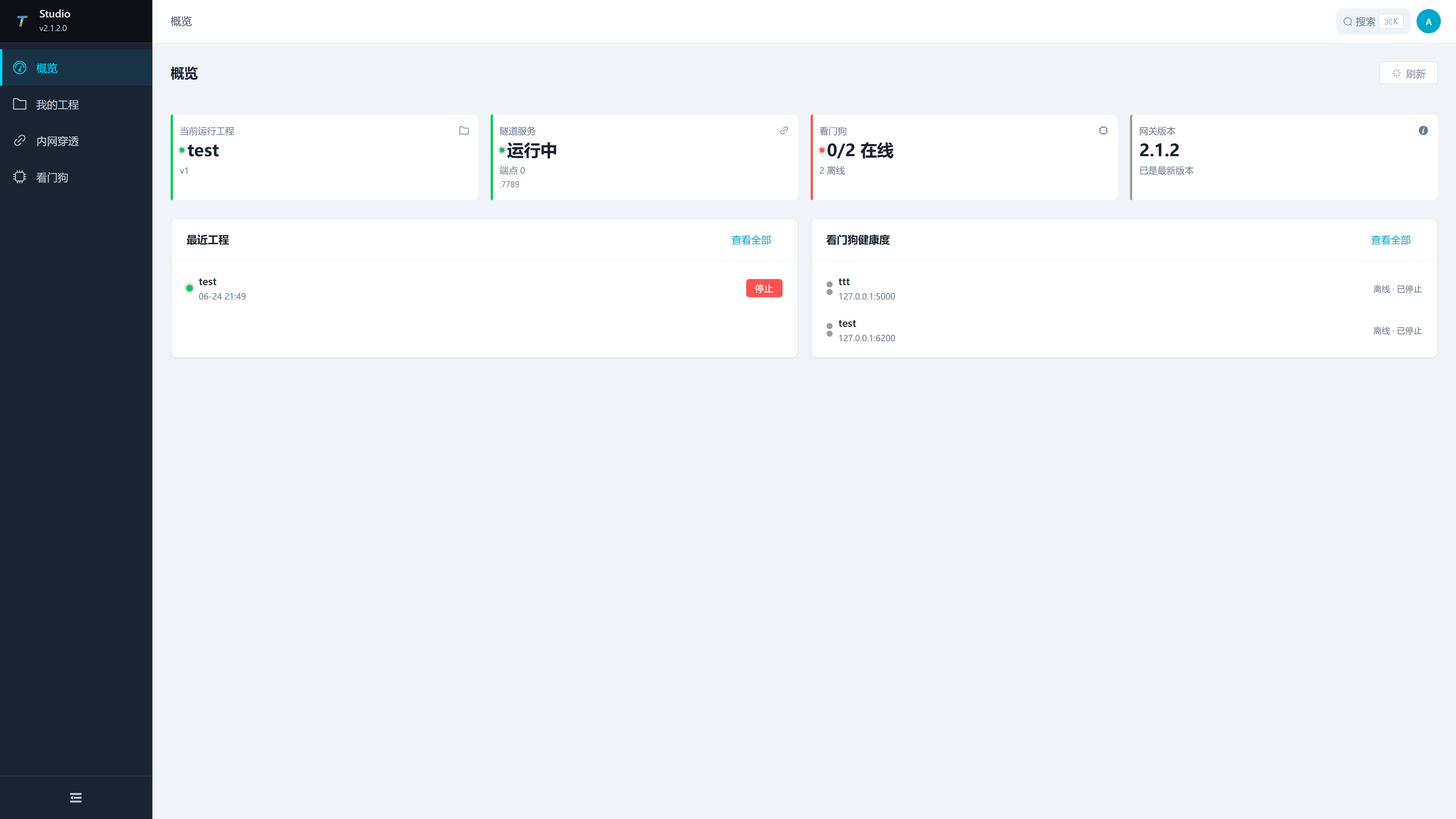
Studio is ThingsGateway's engineering maintenance and deployment tool, used to manage local projects, start local runtime environments, upload or download gateway projects, and maintain the tunnel broker connection with Watchdog.
Studio Project Management Interface:
Studio Main Features
| Functional Modules | Description |
|---|---|
| Project Management | Create, import, and export local projects, start or stop the local runtime environment |
| Project Publishing | Upload projects to Watchdog, select release type, target environment, runtime, and plugins |
| Project Return | Download project packages from Watchdog-managed gateways back to Studio |
| Intranet Tunneling | Configure the Studio Tunnel Broker to expose intranet services with the Watchdog client |
| Watchdog Management | Save Watchdog connections, test status, view backups, and use them as upload and download targets |
Studio Use Cases
- Project maintenance personnel create, import, and back up projects on management computers
- Start the local runtime environment to verify collection, forwarding, and permission configuration
- Upload verified projects to the Watchdog of the production gateway
Watchdog Service
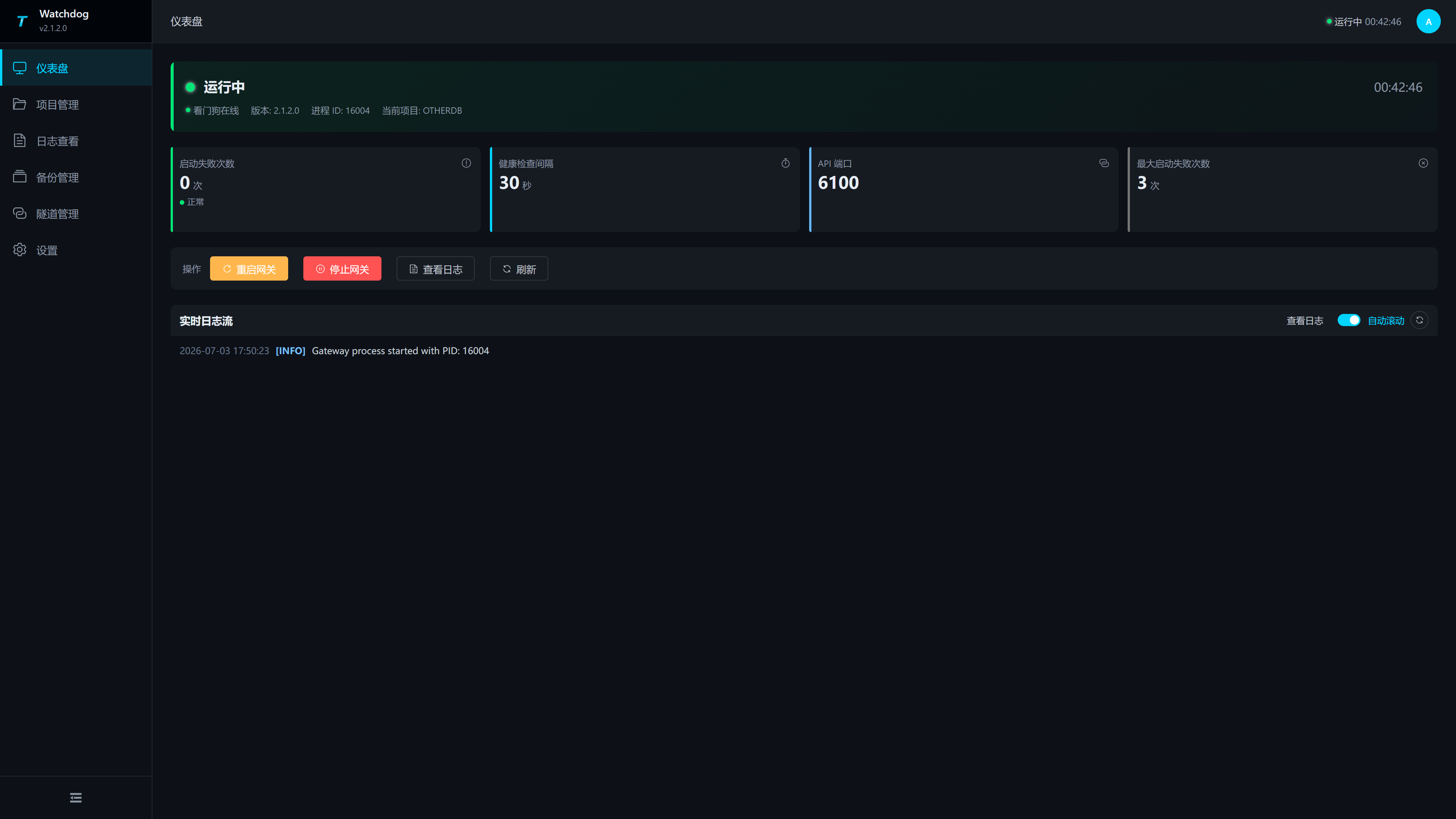
Watchdog is the daemon process at the gateway runtime, responsible for managing and monitoring the runtime process.
Watchdog Main Features
| Features | Description |
|---|---|
| Process Management | Start, stop, and restart the gateway runtime process |
| Health Check | Regularly check process status and API availability |
| Automatic recovery | Automatically restart when processes exit abnormally |
| Project management | Manage multiple project configurations and switchovers |
| Backup management | Project backup and restore functions |
Watchdog Use Cases
- Deployed on gateway devices to run as a system service
- Monitor gateway runtime status 7x24 hours
- Automatically restores services in case of exceptions
- supports remote project upload and deployment
Watchdog provides a web management interface on port 6200 by default and can be managed in a browser at http://<gateway-ip>:6200. The gateway Web interface is provided by GatewayRuntime on port 6100.
Studio uses http://<studio-server-ip>:5100 by default, while Watchdog uses http://<gateway-ip>:6200. Both bundled configurations support standard HTTP access by IP address. Login passwords are encrypted with a one-time RSA-OAEP-SHA256 public-key challenge, but Bearer tokens, project packages, and other administrative data should still use HTTPS for complete transport protection.
GatewayRuntime Gateway Runtime
GatewayRuntime is the core runtime engine, responsible for executing data collection, alarm detection, rule processing, and other core business logic.
Gateway Runtime Interface:
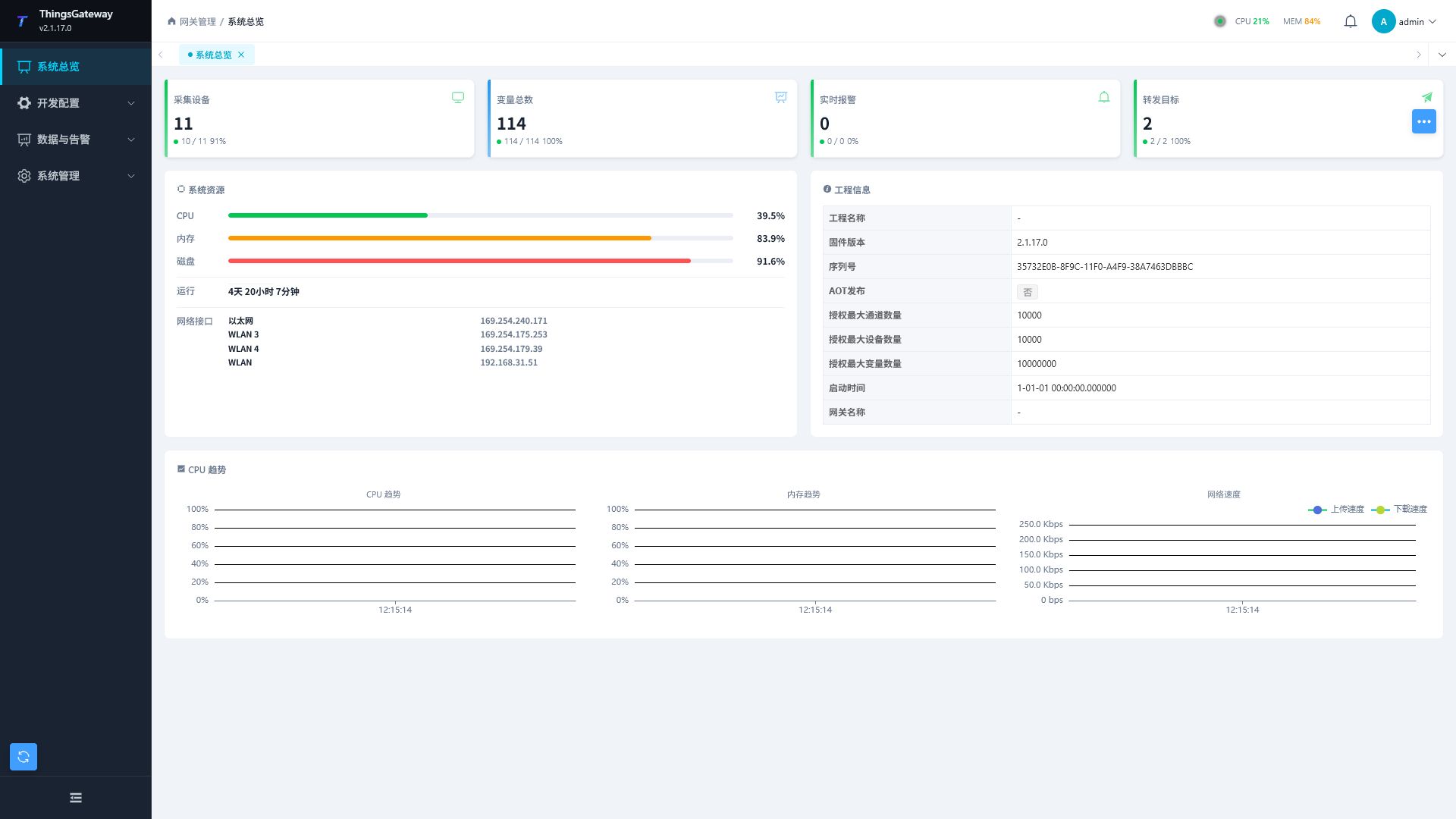
Main Features of GatewayRuntime
| Function Modules | Function Description |
|---|---|
| Data Collection | Data Collected from Devices via Communication Plugins |
| Alarm Detection | Detects anomalies based on configured alarm rules |
| Rule Engine | Executes business processes for visual orchestration |
| Script Execution | Runs user-defined C# scripts |
| Data forwarding | Push data to the upper-layer system |
| Web management | Provide a web interface for configuration and management |
GatewayRuntime Use Cases
- Automatically started and managed by the watchdog
- Performs data collection and business processing
- Provides a web management interface
- Enables data interaction with the upper-layer system
GatewayRuntime Runtime Runtime Mode
- Automatically started by the watchdog
- Or run manually ThingsGatewayRuntime
- Default port: 6100 (web management interface)
Product Features
High Reliability
| Features | Description |
|---|---|
| Process Guardians | Watchdog automatically monitors and recovers processes |
| redundancy support | automatic switching between primary and backup stations |
| exception handling | comprehensive exception capture and handling mechanisms |
| data persistence | Configuration and automatic data saving |
High performance
| Features | Description |
|---|---|
| High concurrency acquisition | Supports simultaneous collection by a large number of devices |
| Low latency processing | Millisecond-level data processing latency |
| Efficient storage | Optimized Data Storage Mechanism |
| Low resource usage | Minimum 256MB memory to run |
Ease of Use
| Features | Description |
|---|---|
| Web Management | Manage via browser, no client installation required |
| Visual configuration | Graphical configuration interface |
| Online debugging | Real-time view of collected data and logs |
| Fast deployment | Ready to use and quickly launch |
Extensibility
| Features | Description |
|---|---|
| Plugin architecture | Extensible communication plugins |
| Script extensions | C# script customization features |
| Custom nodes | rule engine nodes extensible |
| Open API | Provide permission-controlled web API Interfaces |
Technical Specifications
Studio System Requirements
| Project | Requirements |
|---|---|
| Operating System | Windows 10/11, Linux |
| Runtime | .NET 10.0 SDK Or the operating environment required by the product release package |
| CPU | x64 architecture, recommended 2 cores or more |
| Memory | Recommended 2GB or more |
| Storage | Recommended 4GB or more |
GatewayRuntime Runtime
| Project | Requirements |
|---|---|
| Operating System | Windows 10/11, Windows Server 2016+, Linux |
| Runtime | .NET 10.0 Runtime or AOT standalone deployment |
| CPU | x64 architecture, 1 core is |
| memory | minimum 256MB, recommended 512MB or more |
| storage | 2GB or more |
Capacity Planning
The actual number of variables, acquisition cycles, and processing latency depend on communication protocols, device response times, point table scale, script complexity, forwarding targets, historical storage, and gateway hardware. Before project commissioning, real point lists and real communication links should be used for stress verification, and reserves should be reserved for CPU, memory, disk, and offline cache, without directly applying test results from other sites.
Without a commercial license, GatewayRuntime can use up to 50 channels, 50 devices, and 1000 variables. Exceeding any one of these limits requires source code authorization or CNY 1,998 activation code authorization; activation code authorization does not limit the number of Gateway instances.
Network Port
| Service | Default Port | Description |
|---|---|---|
| Studio | 5100 | Web Management Interface |
| GatewayRuntime | 6100 | Web Management Interface |
| Watchdog | 6200 | Web Management Interface |
Studio and Watchdog default listeners 0.0.0.0. When accessing via device IP, the remote management switch, firewall, and standard HTTP permission configuration should be confirmed simultaneously; For detailed steps, see Quick Start.
Related Documentation
- Quick Start - Quick Deployment and Usage Guide
- Studio Usage - Project Management and Deployment Guide
- Gateway Management - Gateway runtime management