Custom Node Types
Custom node types are used to extend the orchestrated nodes of the rule engine. Users create nodes, maintain processing logic, and define parameters; after successful compilation, they can be dragged into the rule flow for use.
First, look at the terminology
| Terminology | On-site understanding |
|---|---|
| Custom node type | Custom rule function blocks for on-site or project purposes can be dragged into the rule flow after successful compilation. |
| Node instance | The node actually dragged into a rule flow canvas and used node. It references a node type. |
| Input parameters | Data passed from upstream nodes to the current node. |
| Output parameters | Data passed to downstream nodes after processing by the current node. |
| Input/Output Parameters | Can receive upstream data and continue to pass data after modifications within the node. |
| Compile | Check whether node code and parameter definitions can be loaded by the gateway. Only after successful compilation, the rule flow can use the latest node. |
| Classification | Grouped nodes in the rule node panel for quick on-site search. |
Page Entry
After logging into GatewayRuntime Web, click the "Develop Configuration → Custom Node" menu on the left.
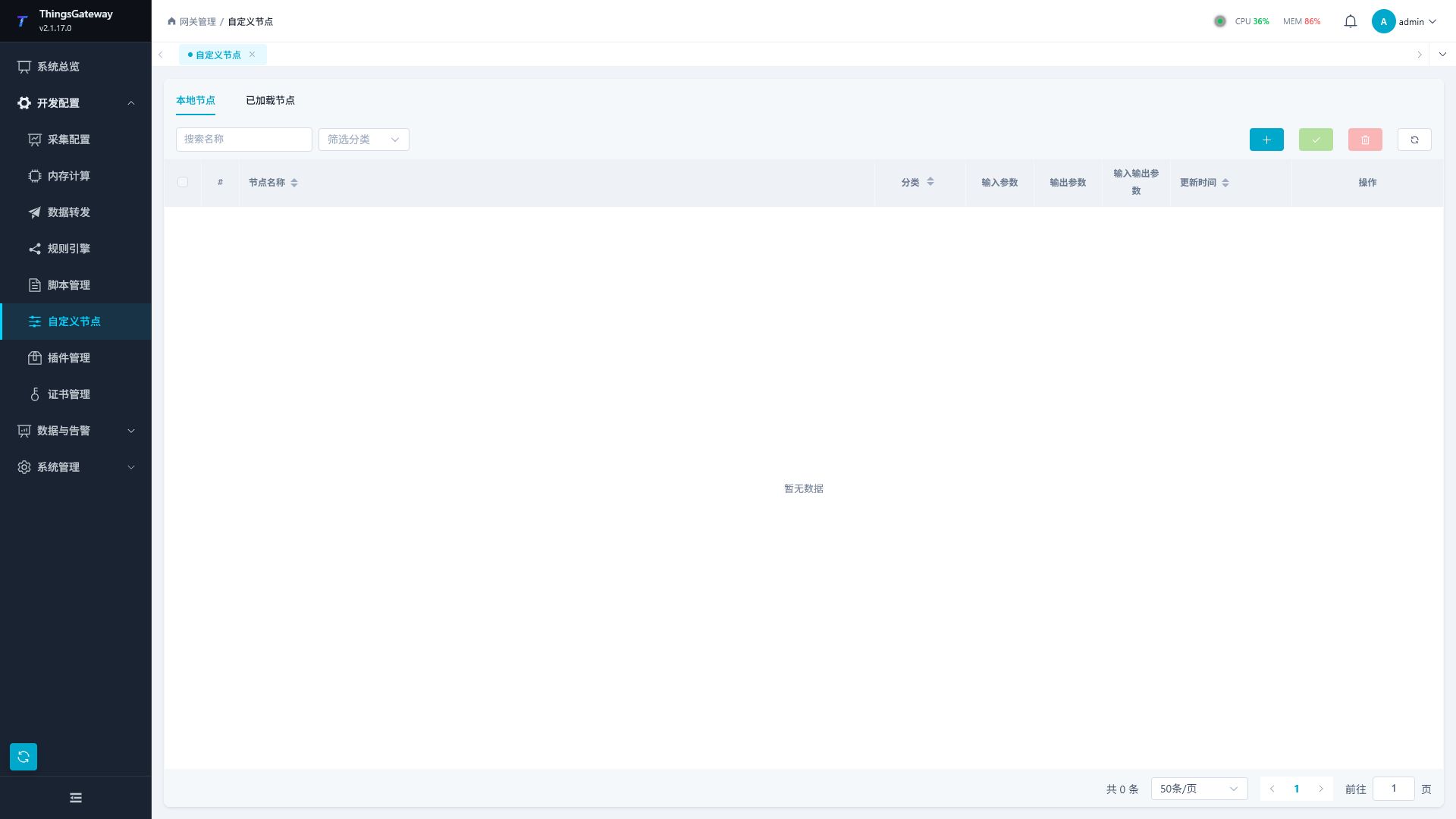
Page Structure
| Area | Description |
|---|---|
| Local nodes | Manage saved custom node types, supporting addition, editing, compilation, deletion, and batch operations. |
| Loaded nodes | View the types of nodes already available in the rule flow, suitable for confirming whether the compilation result is effective. |
| Name Search | Filter by node name. |
| Filter by category | Filter by node classification. |
| Tool buttons | Order: Add, batch compile, batch delete, and refresh; For batch operations, you need to check the node first. |
List Field
| Field | Description |
|---|---|
| Node Name | Node Type Name, which is used in the rule flow to find and use this name. |
| Classification | Node classification makes it easier to organize nodes during rule orchestration. |
| Input Parameters | Number of input parameters defined by the current node. |
| Output parameters | Number of output parameters defined by the current node. |
| Input/Output Parameters | The number of parameters that can be both input and output. |
| Update Time | Last saved or compiled time. |
| Operations | Edit, compile, or delete the current node. |
Create a new node
Click the 'Add Node' button at the top right of the list to open the "New Custom Node" pop-up.
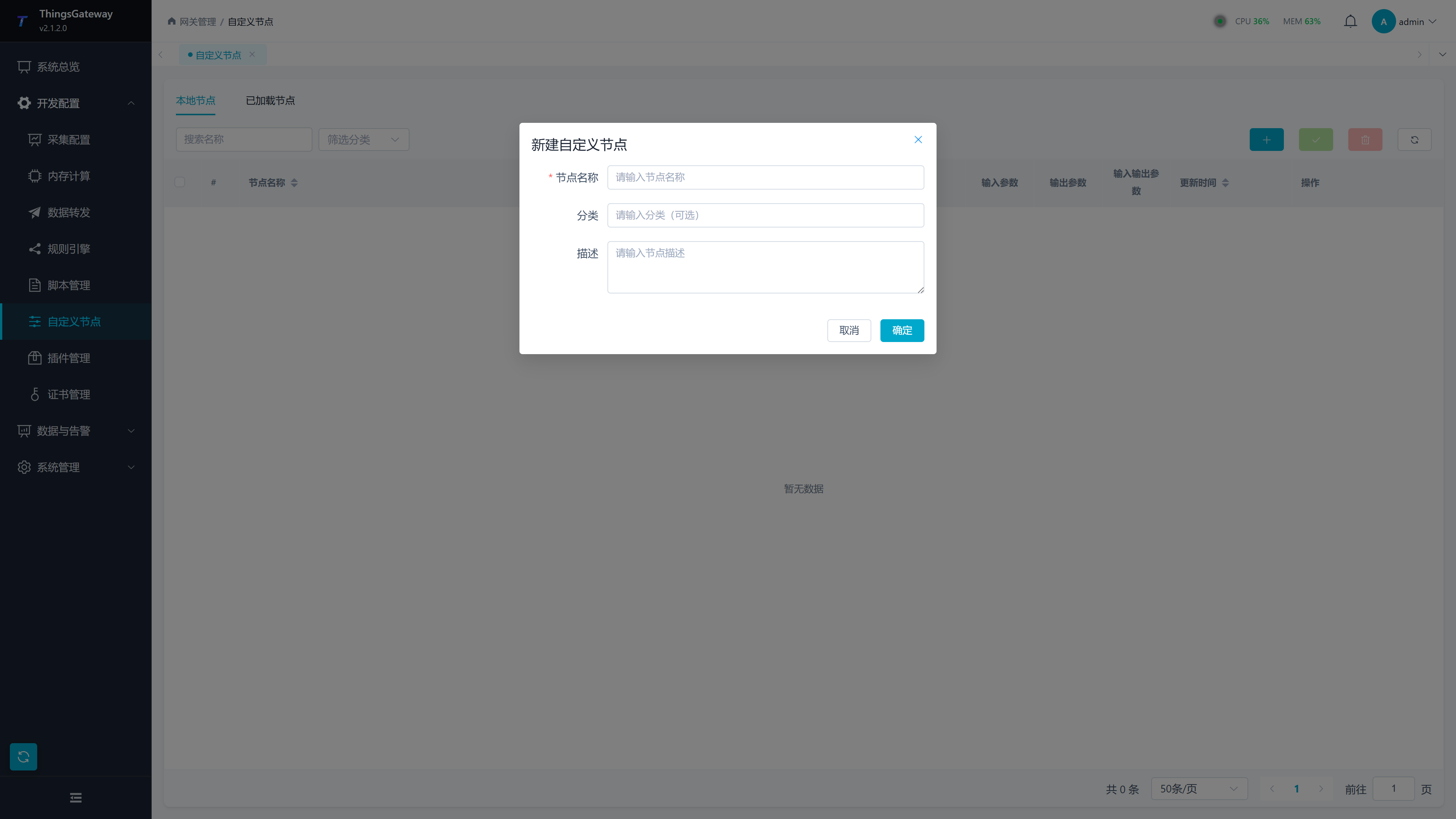
| Configuration Items | Description |
|---|---|
| Node Name | Required. It is recommended to use English, numbers, and underlines to keep the rule flow references stable. |
| Classification | Optional. Used to organize nodes by business or processing type. |
| Description | optional. Record node usage, input/output agreements, and maintenance precautions. |
After clicking "OK," the system will create a node and automatically enter the node editor.
Node Editor
The node editor includes the top operation bar, code editing area, and bottom information panel.
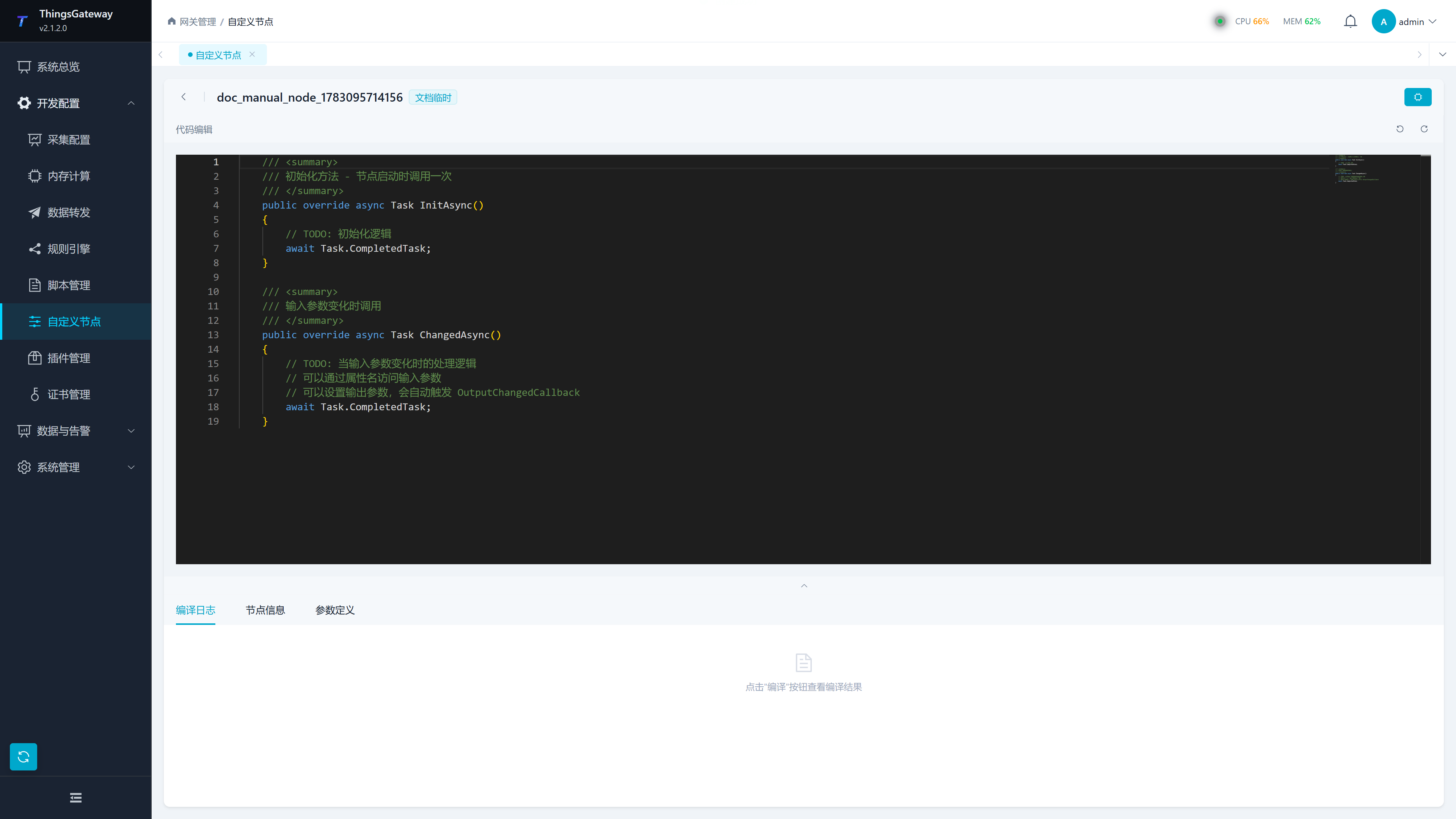
| Area | Description |
|---|---|
| Back Button | Returns a custom node list. |
| Node Name Tag | Displays the current node name and classification. |
| Compile and save the main button on the top right of the | . First, the node information and processing logic are saved, then compilation is executed. |
| Code editing | Maintaining node processing logic. |
| Bottom panel | contains the "Compilation" tabs, "Node Information," and "Parameter Definitions." |
Node Information
The "Node Information" tab is used to maintain basic information.
| Fields | Description |
|---|---|
| Node Name | Node Display and Reference Name. After modification, you need to compile and save. |
| Classification | Node classification. |
| Describe the purpose and maintenance of | nodes. |
Parameter Definition
The "Parameter Definition" tab maintains three types of parameters: input, output, and input/output. Parameter definitions affect node connections and data transfer in the rule flow.
| Parameter Type | Description |
|---|---|
| Input Parameter | Passed from the upstream node and read internally by the node. |
| Output parameters | Processed by nodes and output for downstream nodes. |
| Input/Output Parameters | Serves as both input and output, suitable for values that need to be passed after internal node modification. |
| Parameter field | Description |
|---|---|
| Parameter name | Parameter identifier, It is recommended to use clear English or pinyin for the name. |
| Data Type | Parameter Value Type. For numbers, select integer or decimal type; for switches, select boolean type; for text, select strings; and when passing structured content, select object type. |
| Description | Parameter Usage Description. |
Compilation Log
After clicking "Compile and Save" at the top, the "Compilation Log" at the bottom will display the saving and compilation process.
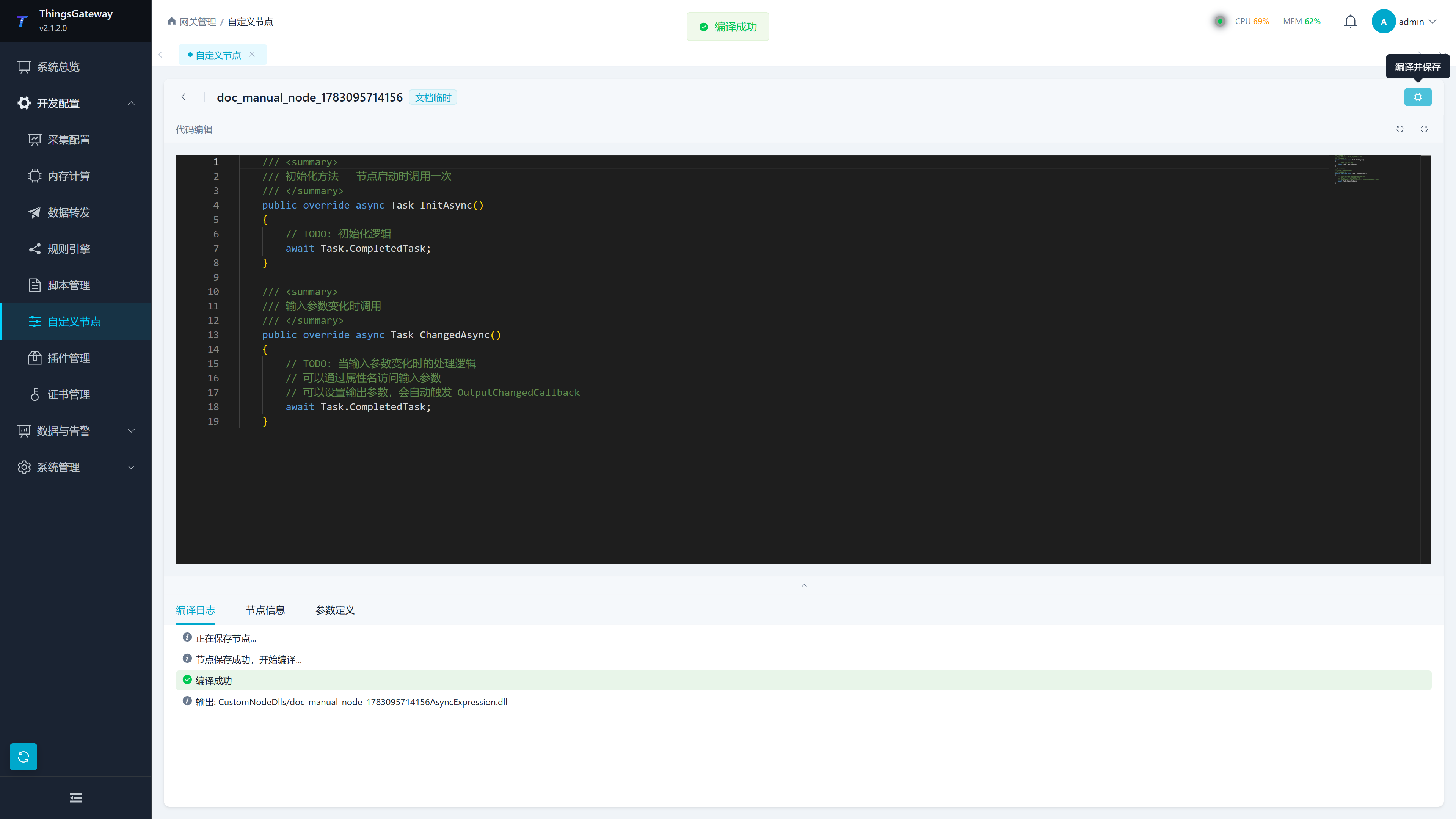
| Log entries | Description: |
|---|---|
| Saving nodes | Save current node information, code, and parameter definitions before compilation. |
| Node saves successfully | Compilation begins after successful save. |
| Compilation successful | Custom node code is compiled. |
| Output | Displays compiled output information for easy troubleshooting of loading issues. |
| Error/Warning Statistics | The right side of the bottom panel displays the current number of errors and warnings. |
When a compilation error occurs, first handle the first red error; Click the error item to locate the corresponding code location.
Common Operations
| Operations | Steps |
|---|---|
| Edit Nodes | Click "Edit" in the list to enter the editor for maintaining code, node information, or parameter definitions. |
| Single Compilation | Click "Compile" in the list to verify whether the current node can compile. |
| Batch compile | After checking multiple nodes, click batch compile. Suitable for unified verification after upgrades. |
| Delete the node | Click "Delete" and confirm. Before deletion, confirm that the rule flow no longer references this node. |
| View Loaded Nodes | Switch to "Loaded Nodes" to confirm that nodes are registered at runtime. |
Usage Notes
| Scenarios | Recommended |
|---|---|
| Parameter Modification | After modifying parameters, the rule flow connection referencing the node should be checked simultaneously. |
| Category maintenance | Classification affects node search efficiency; it is recommended to classify by business domain or function type. |
| Compilation failure | First check the save log, then check the compilation diagnosis; If a save fails, the actual compile will not begin. |
| node does not appear in the rule | Confirm the node has been successfully compiled and refresh the rule engine page or reopen the flow editor. |
| Production deletion | Export or back up the rule flow before deleting to avoid leaving unresolved node references. |