Studio Project Management
The "My Projects" page is used to maintain Studio native projects. For complete end-to-end operation, refer to the Studio Web User Manual.
Page Purpose
Studio project management is used to maintain local projects and perform development runs, import and export, upload to Watchdog, and download projects from Watchdog.
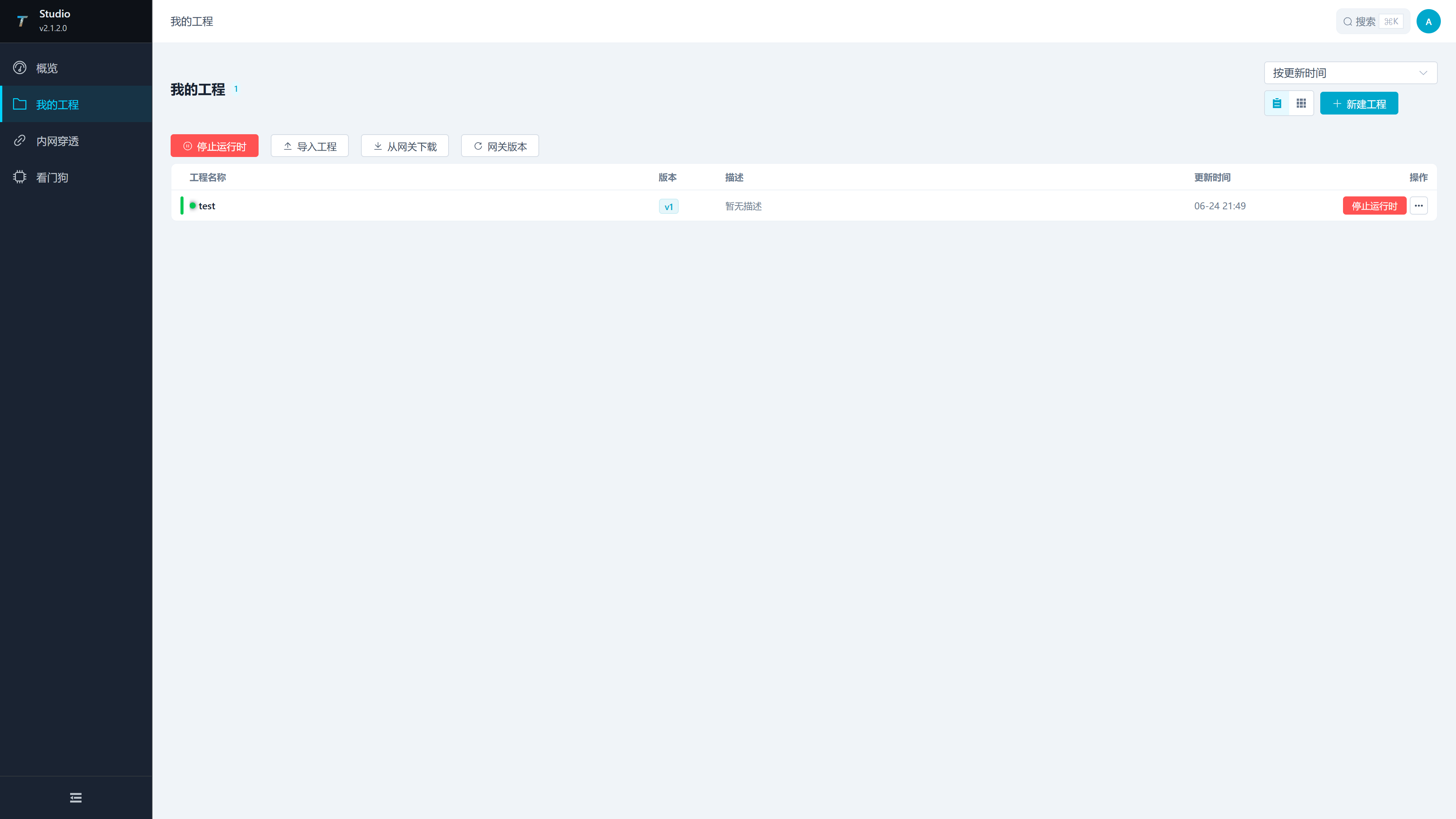
| Area or Operation | Description |
|---|---|
| Sort | supports sorting by update time, creation time, or name. |
| View Switching | The desktop side can switch between list view and card view. |
| Create a New Project | Open the project drawer and create a local project. |
| Stop Runtime | Local Runtime Displays while running and is used to stop the running project. |
| Import the project | Import local projects from the ZIP project package. |
| Download from the gateway | Download the package from the configured Watchdog service. |
| Gateway Version | View the current version, latest version, and update status of GatewayRuntime used by Studio. |
| Project Operations | Each project supports start/stop runtime, edit, export, upload, and deletion. |
Project Lifecycle
| Stages | Studio Operations | Explanation |
|---|---|---|
| Create | Create a new project or import a ZIP | It is recommended to clearly state the project name and description to facilitate publishing, backup, and feedback identification. |
| Local Debugging | Launch the runtime and enter GatewayRuntime Web | Studio will start the local runtime. After opening the Gateway Web, continue configuring channels, devices, variables, scripts, etc. |
| Publish | Upload to Watchdog | Select the target Watchdog, target environment, and runtime update options. |
| Return | Download from the gateway | Download projects from the on-site Watchdog back to Studio for easy troubleshooting and secondary maintenance. |
| Archiving | Exporting ZIP | used for version retention, migration, or delivery. |
Create or Edit a Project
Click "New Project," or click "Edit" in the More Projects menu to open the project drawer.
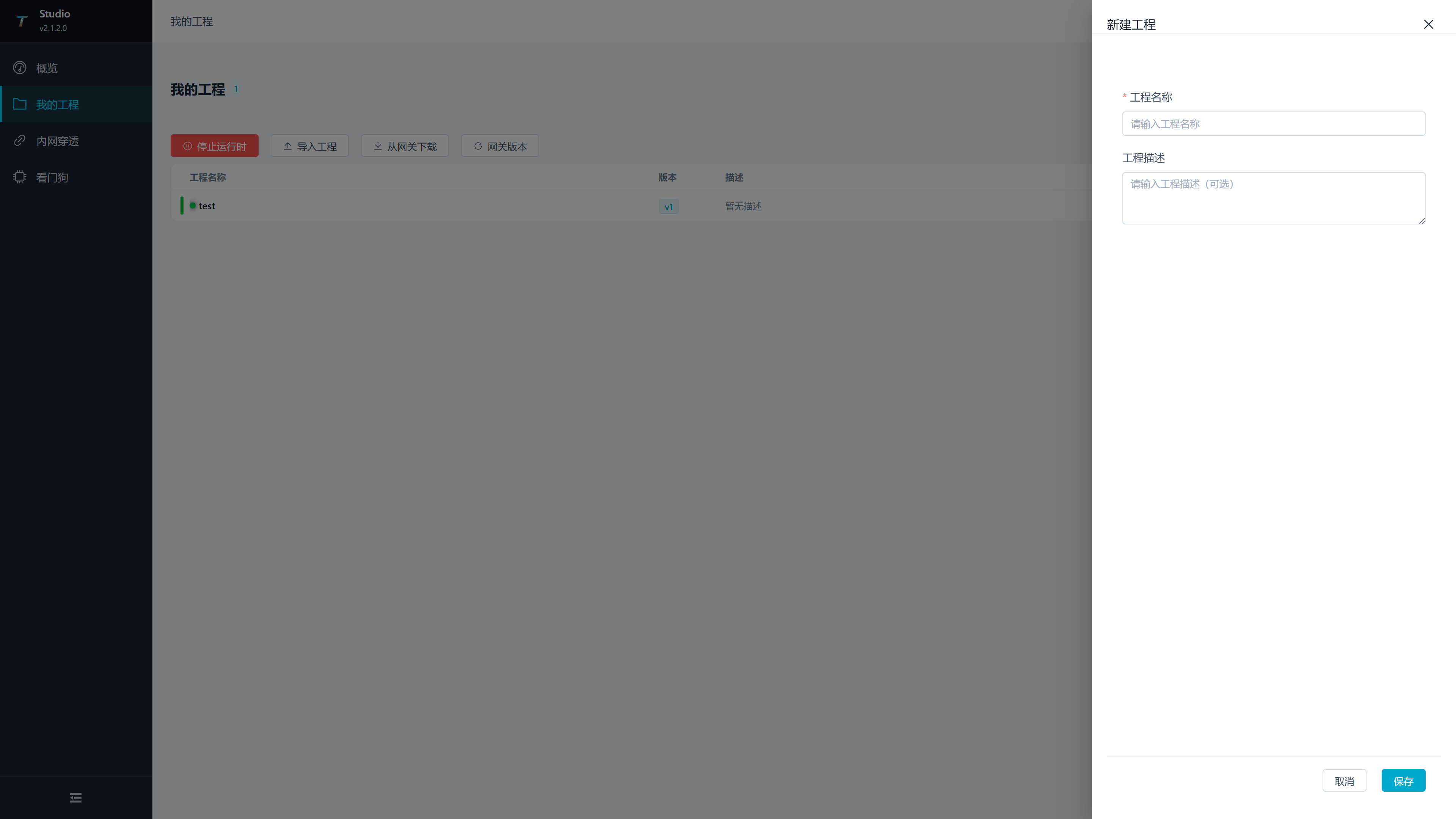
| Configuration Items | Description |
|---|---|
| Project Name | Required, length check is 2-50 characters. It is recommended to include information about the site, production line, or equipment group. |
| Project Description | Optional, used to record usage, version notes, site differences, or maintenance notes. |
| Save | Create a project when creating it and update the project name and description when editing. |
| Cancel | Close the drawer and do not save this modification. |
Start Local Runtime
Click the project itself in the list or card, or click the main project button "Start Runtime". Studio will start the project's local runtime and open GatewayRuntime Web.
| Status | Page Performance | Operation Suggestions |
|---|---|---|
| Not running | The main button displays startup runtime. | After clicking, wait for the startup to start; the card will display a mask during startup. |
| While Running | Display the project status and the main button can stop running. | Clicking the project will directly open GatewayRuntime Web. |
| Switching Projects | When starting another project, the ongoing development project switches. | Before switching, confirm that the current configuration in GatewayRuntime Web is saved. |
Studio project pages are only responsible for starting and stopping local runtime. After entering GatewayRuntime Web, configurations such as channels, devices, variables, scripts, nodes, and data forwarding are executed according to the GatewayRuntime operation manual.
Import Project
Click the toolbar "Import Project" and select the ZIP project package.
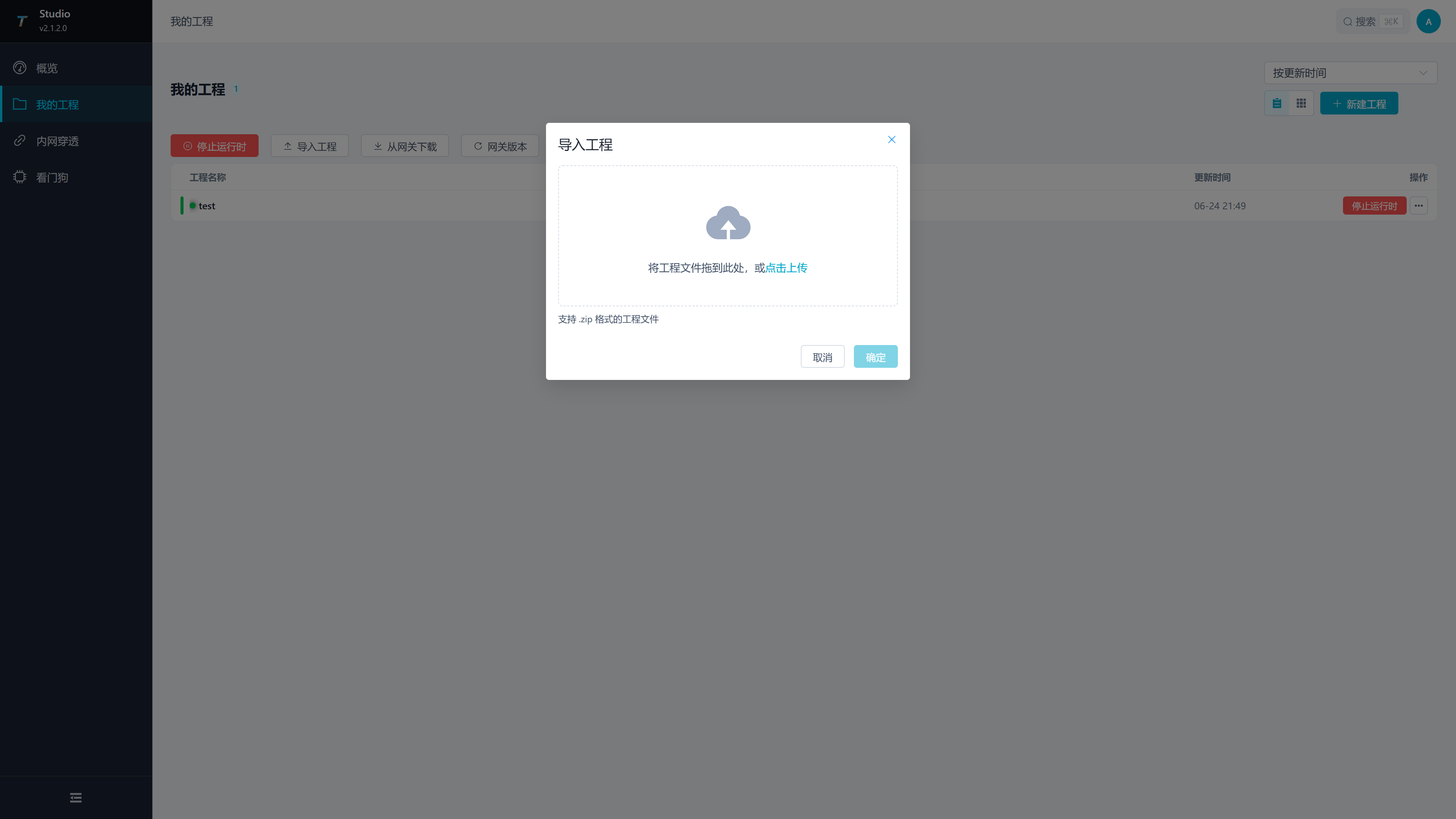
| Configuration Items | Explanation |
|---|---|
| Project Package | only supports ZIP files. You can drag it to the upload area or click to select. |
| Import Project Name | Optional. After filling it out, import using the name; If not filled in, use the original name of the project package. |
| Confirm | After selecting the file, import can be executed. |
After importing, check whether the project name, description, and update time meet expectations, then start the local runtime to verify the project configuration.
Export Project
Click "Export" in the project's More menu. The browser downloads a ${project-name}.zip project package, which can be migrated, archived, or sent to maintenance personnel for troubleshooting.
| Usage Scenarios | Description |
|---|---|
| Version Archive | Export once before and once before release for easier rollback and comparison. |
| Migration Delivery | Move the project to another Studio or hand it over to on-site personnel. |
| Troubleshooting | Exporting on-site works to maintenance personnel for reproduction. |
Upload your project to Watchdog
Click "Upload" in the More Projects menu to open the upload drawer.
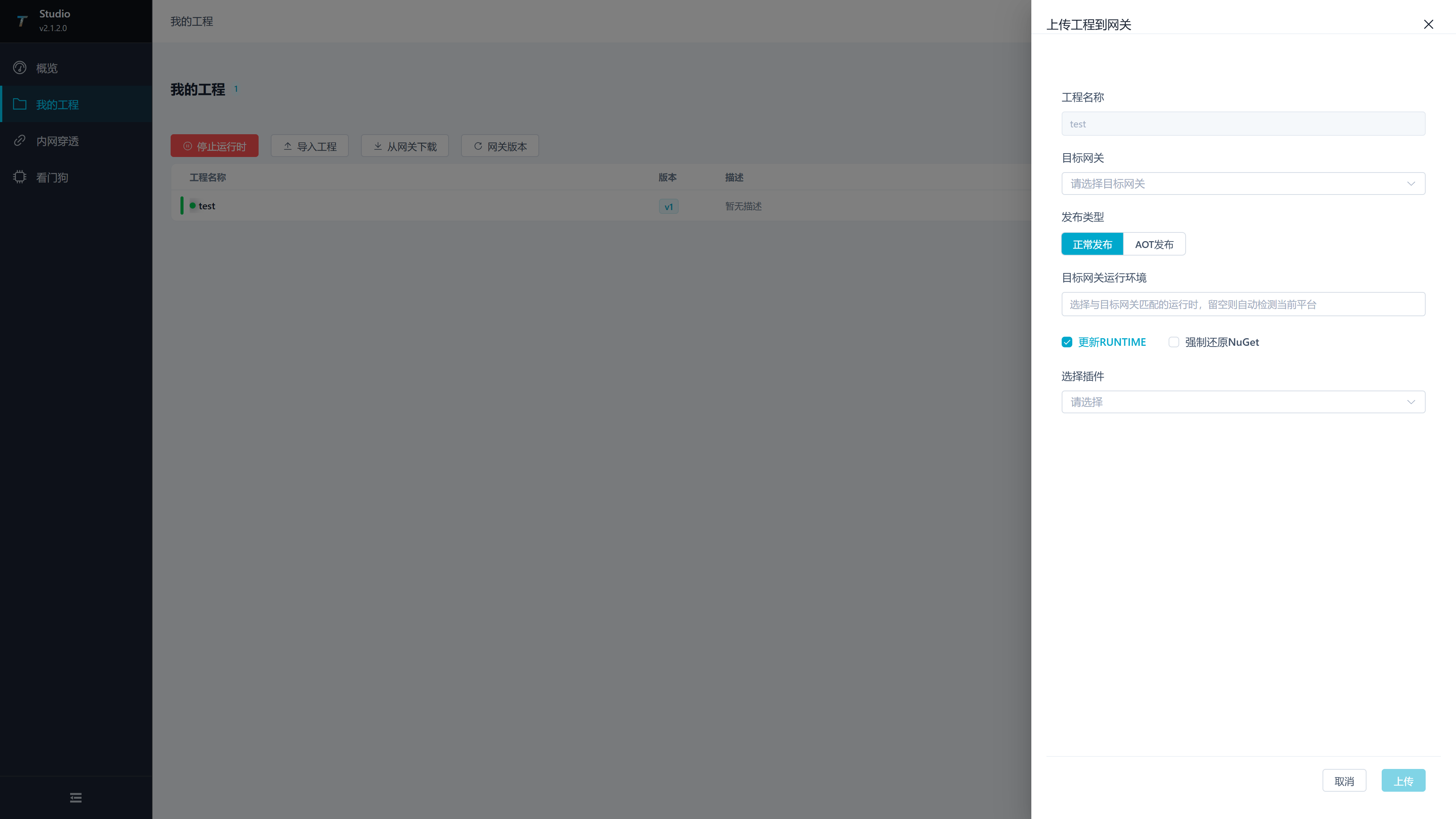
| Configuration Items | Description |
|---|---|
| Project Name | Current project to be uploaded, read-only display. |
| Target Gateway | selected from configured Watchdog services. If there are no options, you need to first add a service on the "Watchdog" page. |
| Release Method | Normal release or AOT release. Normal release is used for routine deployment; AOT releases are used for deployments with clear target environments and the desire to use standalone runtime packages. |
| Target environment | runtime identifiers, such as Windows/Linux and CPU architecture combinations. When publishing AOT or cross-platform releases, it must be filled out carefully; incorrect entries may prevent the target gateway from launching the release package. |
| Update RUNTIME | Update the target GatewayRuntime program file simultaneously when uploading. For production environments, it is recommended to use the maintenance window. |
| Forced restoration of NuGet | dependencies upon release. It can be used after dependency exceptions, cache construction exceptions, or switching target environments; Publishing failures may occur when the network cannot access the NuGet source. |
| Upload | Once the target gateway is selected, upload can be executed. |
Pre-Release Checks
- Test the target Watchdog connection on the "Watchdog" page.
- Create a backup for the target project in Watchdog Web's "Backup Management."
- Confirm that the target environment matches the gateway operating system and CPU architecture.
- Checking "Update RUNTIME" affects the target GatewayRuntime program files; arrange a maintenance window in production.
- Checking "Force restore NuGet" restores dependencies; check the NuGet source, network, and target environment identifier if publishing fails.
Download the project from the gateway
Click the toolbar "Download from the gateway" to open the download drawer.
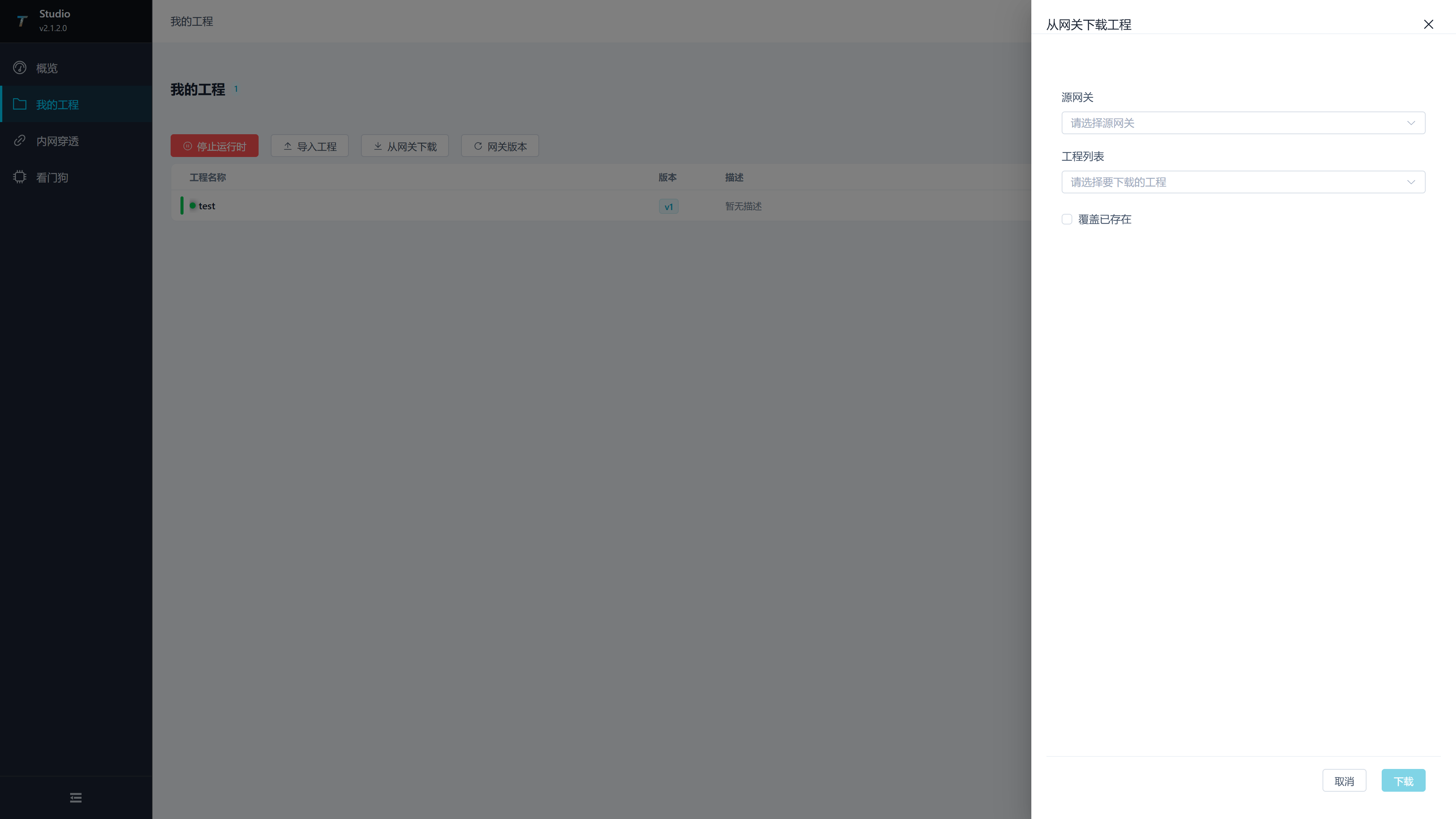
| configuration from the gateway | Description |
|---|---|
| Source gateway | Select the configured Watchdog service. |
| Project List | Select the package on that Watchdog. After switching the source gateway, the project list will be reloaded. |
| Override existing projects | Overwrite if there is a project with the same name locally. If not checked, projects with duplicate names will fail to download or be blocked. |
| Download | Download can be executed after selecting both the source gateway and the project. |
After downloading, open the project and enter GatewayRuntime Web to confirm that the channels, devices, and variables match the field configuration.
Gateway Version
Click "Gateway Version" on the toolbar to check the current version, latest version, and whether there are updates for the GatewayRuntime used by Studio. When an update is present, you can click the update button; a confirmation prompt will appear before the update.
| Field | Description |
|---|---|
| Current version used | Studio GatewayRuntime version. |
| Latest Version | Check the latest version of GatewayRuntime. |
| Status | shows whether it is the latest version. |
| Update version | Available when updates are available; Check the current project and runtime status before execution. |
Frequently Asked Questions
| Phenomena | Handling Suggestions |
|---|---|
| New Project Fails to Save | Check if the project name is empty and if the length is between 2 and 50 characters. |
| Cannot open GatewayRuntime Web | after clicking the project. Check if the local runtime started successfully; if necessary, stop and restart again. |
| The upload drawer has no target gateway | first add the Watchdog service on the "Watchdog" page and test the connection. |
| Upload failure | Check whether Watchdog is online, whether the target environment matches, and review the runtime build logs. |
| Empty download project list | Check whether the source Watchdog is online, whether the account and password are correct, and whether there are project packages in Watchdog project management. |
| AOT release exceptions | Check whether the target environment, runtime files, and native dependencies meet the AOT publishing requirements. |